Tuesday, July 29, 2014

Renosterveld – a Virgin’s Perspective

by Dr Louise de Waal

As some of you may know, I have recently joint the Overberg Lowland Conservation Trust as a freelance consultant to help Odette with a wide range of jobs and duties. My first task was getting to grips with what the Trust does and of course what Renosterveld is. Fynbos and Renosterveld have intrigued me ever since I moved to South Africa. However, the sheer diversity of these vegetation types with their huge numbers of endemic species baffles a Western European trained environmental scientist at the same time.


As you can imagine, my learning curve has been a rather steep one, so thought I would share some Renosterveld facts that amazed me most.

Did you know?

Fynbos is the generic name for all 119 vegetation types in the Cape Floristic Region.

True Fynbos is generally associated with poor acidic sandy soils found in more mountainous and coastal regions and is characterised by a dominance of proteas, ericas (heather), and restios (reeds).

Renosterveld is generally found in lower lying areas on more fertile, clay- and shale-based soils, and is typified by the absence of these three ‘Fynbos indicators’. Instead it is dominated by Asteraceous shrubs, i.e. shrubs belonging to the daisy family of which the Renosterbos is one example, and often a diversity of grasses.

Renosterveld is not only the richest bulb kingdom in the world and it also has extremely high species diversity with literally 100s of different plants found in just a few hectares of Renosterveld.


New Renosterveld species are discovered all the time, like the Hesperantha kiaratayloriae, a little Iris that grows only on quartz patches in the Eastern Rûens and till now only a single population of this rare plant has been recorded.

Renosterveld originally covered the entire lowlands of the Overberg and only an estimated 4-6% remains today.

There are four types of Renosterveld found in the Overberg, Central Rûens Shale, Eastern Rûens Shale, Western Rûens Shale, and Rûens Silcrete Renosterveld. All are Critically Endangered.

We don’t really know what original Renosterveld looked like, as these veld types were radically transformed through livestock grazing and subsequent ploughing relatively soon after European settlement.


We believe that Fynbos was once grazed by large mammals, like black rhino, eland, red hartebeest, bontebok, quagga, and blue buck. Some of these are sadly now extinct.

Renosterveld is highly fragmented with over 12,000 remnants left. This may sound a lot, but 99% of those remnants are smaller than 80 ha and some are as small as 0.0001 ha.

The high occurrence of endemic and rare species makes Renosterveld extremely vulnerable to fragmentation, which often leads to high risks of extinction.


Friday, April 4, 2014

Our news is spreading...

Two of our respected fellow conservation organisations have shared our posts on their blogs: Fauna and Flora International and Africa Geographic!

Protecting one of the most threatened habitats on earth
 (FFI article)

Help give renosterveld a home
(Africa Geographic article)


Sunday, March 23, 2014

WE NEED YOUR HELP!!

We are running a crowd-funding campaign to raise money for the first-ever Visitor & Research Centre in renosterveld. The campaign starts on the 23rd March and will run for 40 days. We have only these 40 days to raise $25 000!!

Please help by contributing through www.igg.me/at/renosterveld-centre and sharing this link with as many friends, family and colleagues as you possibly can.

Without your help, we cannot make this happen.


Thursday, January 16, 2014

Latest OLCT News Update

Latest Overberg Lowlands Conservation Trust News Update:
Spring surveys, Animals in renosterveld, Extending our knowledge on distributions of rare and threatened plants and more...

Read our newsletter here: www.overbergrenosterveld.org.za/OLCT_Newsletter2_Jan2014.pdf

To receive our news by email, please visit www.overbergrenosterveld.org.za to sign up.


Sunday, October 13, 2013

FIRST RENOSTERVELD LAND PURCHASE IN THE OVERBERG!

We are VERY excited to announce that WWF-SA has purchased the first piece of renosterveld in the Overberg and we, the OLCT, will be managing this land as a nature reserve. We also hope to establish a research centre on the land. This is the result of nearly five years of collaborative efforts between us and WWF and finally, we have our first piece of land, secured forever for conservation.
 
The farm is called Haarwegskloof and comprises about 500 ha of Eastern Ruens Shale Renosterveld, just north of De Hoop Nature Reserve. This special veld contains several quartz patches, which are where we have found many of our new and threatened species - most notably, it contains the only known population of Polhillia curtisiae.
 
Thank you to our colleagues at WWF for never giving up and for persisting until this deal was closed. This is a hugely significant step forward for renosterveld conservation in the Overberg.  


Polhillia curtisiae, CR, only one known population in the world

        Gibbeaum haaglenii (EN) growing at Haarwegskloof
 

Haarwegskloof with quartz patches in the foreground. This farm is linked with large, adjacent patches, making it part of the largest pristine lowland renosterveld remaining on earth.

New Mazda Wildlife Vehicle for the OLCT!!

Mazda has treated us to a brand new vehicle and replaced the 'old' one with the new BT50 double-cab, 2.5, diesel bakkie. It is awesome!! Much lighter on fuel and a pleasure to drive. And it's beautiful :) Thank you Mazda!!

Wednesday, September 18, 2013

Overberg Lowlands Conservation Trust: our first newsletter!

Please go to www.overbergrenosterveld.org.za and sign up to receive our quarterly newsletters if you would like to do so! :)


Evan Eifler's Blog


Please note that you can now follow Evan Eifler's posts on his Blog:
www.evanrenosterveld.blogspot.com

Evan is our American volunteer, who will be working with us for the year.

He is photographing as many plants and animals in renosterveld as he can over this period and uploading many of these images onto I-Spot (www.ispot.org.za) for adding to the central database, as well as getting assistance with IDs.

The idea is that we develop our renosterveld database in a way that will guide us for future conservation action in the Overberg's lowlands.

In our spring surveys, we have found new populations of several threatened species, which is very exciting!!
 
For example, this is Gladiolus vandermerwei, Endangered.
 
Then there is Moraea tricolor, a real little gem...
 
And this wonderful little Klein Karoo (Robertson) Chameleon...


Friday, July 12, 2013

The remains of the renosterveld

The remains of the Renosterveld
Farmer's Weekly | 5 July 2013


Download Article

Overberg Lowlands Conservation Trust director Odette Curtis talks about the value of fragments in this threatened ecosystem and the exciting discovery of six previously unknown botanical species. Fertile, low-lying habitats of the world have always been the most suitable for cultivation... read more


 Download Article

South African Journal of Botany


A conservation and floristic assessment of poorly known species rich quartz–silcrete outcrops within Rûens Shale Renosterveld (Overberg, Western Cape), with taxonomic descriptions of five new species
 
By O.E. Curtis, C.H. Stirton, A.M. Muasya

Download article


Article history:
Received 31 December 2012. Received in revised form 20 March 2013. Accepted 25 March 2013

  
ABSTRACT

Quartz fields are islands of distinct vegetation in southern Africa. Such habitats differ from surrounding shale substrate in geomorphological and climatic attributes, and are dominated by a predominantly succulent flora with between 14% and 91% endemism. Previous studies have identified and surveyed quartz fields within the Succulent Karoo biome, but little is known about the Overberg quartz–silcrete fields located in the Renosterveld vegetation (Fynbos biome). This study maps the occurrence of quartz–silcrete fields in the Overberg (Eastern and Central Rûens Shale Renosterveld) and investigates if such fields support distinct vegetation compared with surrounding shales. Forty-seven plant species were recorded, 19 of which are endemic to the quartz–silcrete patches, including several newly discovered species in vascular plant families Cyperaceae (Ficinia), Iridaceae (Hesperantha) and Fabaceae (Aspalathus, Otholobium, Polhillia, Xiphotheca).


Add caption
Five species among these are described in this paper: Aspalathus quartzicola C.H.Stirt. & Muasya, Aspalathus microlithica C.H.Stirt. & Muasya, Ficinia overbergensis Muasya & C.H.Stirt., Otholobium curtisiae C.H.Stirt. & Muasya, and Polhillia curtisiae C.H.Stirt. & Muasya. Detailed floristic composition of 25 quartz fields is surveyed,together with their conservation status. The Overberg Quartzveld is a critically endangered vegetation type that is the sole locality for 18 Red Listed plant species; which include seven new taxa. It is a distinct vegetation unit embedded within Rûens Shale Renosterveld in the eastern Overberg region of South Africa. These quartz patches have been overlooked in the past and we emphasize the need for further research and conservation attention of these habitats.

Download article


Saturday, June 1, 2013

Kickstarter project - 30 days to raise $10 000!!

The Overberg Lowlands Conservation Trust needs your help!! We are working with an American student on a project for which we need to raise $10 000 within 30 days (and it's all or nothing!) to make it happen. This project forms a critical component of what we are doing as a Trust and this is a real opportunity for you to help us achieve our objectives towards saving renosterveld. Please take 5 minutes and follow the link below and see how YOU can make an enormous difference to our cause!!
http://www.kickstarter.com/projects/1929410349/recognizing-the-renosterveld


Thursday, April 11, 2013


Please note that you can also follow up on Facebook now.... www.Facebook.com/OverbergRenosterveld

Camera traps in renosterveld

We have started setting out camera traps in renosterveld remnants and here is what we have found so far.... caracal, African Wild Cat, Egyptian Mongoose (also known as Large Grey Mongoose) and Porcupine. This is all from one site. Watch this space for more, as we have just set two cameras up on a new farm...


Thursday, December 13, 2012

OLCT RECEIVES MAZDA WILDLIFE VEHICLE!

Thank you, Mazda Wildlife Fund, for recognising the importance of the work we are doing and providing us with a loaned project vehicle... a beautiful BT50 double cab 2X4 Mazda bakkie! We are thrilled with this acknowledgement so early on in our development and believe with this platform, we can go from strength to strength!

(Above) Odette collecting the Mazda from the friendly staff at B&M, Bredasdorp and (below) The OLCT Board celebrating the arrival of the new vehicle at our Board meeting on 12 Dec 2012.


Black Harrier & Renosterveld Research


Thursday, November 1, 2012

Going, going, gone: Overberg bulb naming rights sold

The right to name a rare Overberg bulb has been sold for £29,200 in the United Kingdom. The naming of the newly-discovered Hesperantha species was auctioned on 31 October. Proceeds of the auction will go to the Overberg Lowlands Conservation Trust (OLCT), an Agulhas Biodiversity Initiative partner.


The auction was arranged through Fauna and Flora International (FFI). The starting price was £500, and bidders were able to bid online. Bidding closed on Wednesday night at the FFI Annual General Meeting at the Royal Geographical Society held in London.

The rare bulb was discovered in the Overberg by the OLCT Director Odette Curtis late last year. Curtis, who attended the auction, said she was “thrilled” with the outcome.

Funds raised will now be used in supporting conservation of lowland renosterveld. Renosterveld is critically endangered, with only four to six percent remaining in South Africa. It is threatened by invasive alien plants, overgrazing, veld fragmentation and in some cases by illegal ploughing.
 
The winning bidder will also receive a painting of the beautiful iris, and a bronze casting of the flower. 


Thursday, September 27, 2012

Suurbraak Commonage Bioblitz 2012

Today we spent a fantastic day on the Suurbraak Commonage with CREW (Custodians of Rare and Endangered Wildflowers).... we saw so many gems - what a good reminder of why it is so important to conserve these critical lowland habitats. Here are some of the 'angels'...  Please visit ispot for more submissions from the day and see a useful way of getting your obsesrvations in the field identified! www.ispot.org.za


Erica filamentosa (Vulnerable)


Hesperantha sp. (?)


Gladiolus grandiflora / floribundus
 
Aspalathus sp.


Aristea sp.


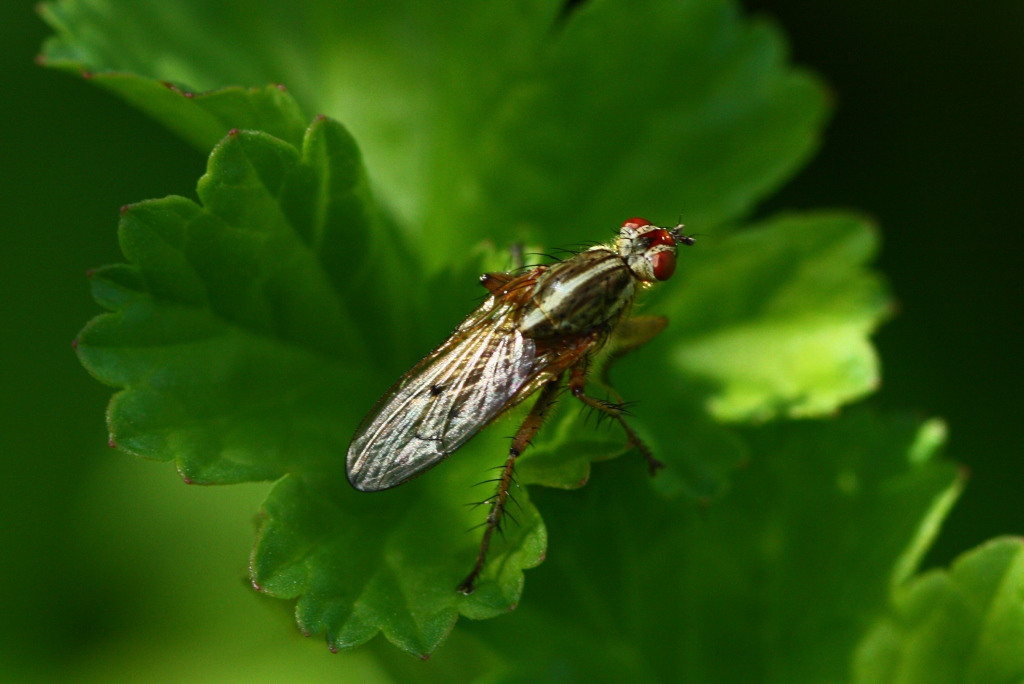
Soldier Fly (?)


Ground Protea sp.
 
Wachendorfia paniculata


Pelargonium triste


Mantis sp.
Lobelia erinus
Lachenalia uniflora
CREW: Cameron McMaster & Ismail Ibrahim


Thursday, August 2, 2012

The bid for the naming of the new flower (Hesperantha sp.) is now open.... please visit www.irisauction.com and see the advert below!

Monday, July 23, 2012

What species is this?

GETTING YOUR PHOTOGRAPHS IDENTIFIED


If you have taken photos of plants or animals in the fynbos or elsewhere, you can post them on www.ispot.org.za and there is a good chance that somebody will identify them for you!